Start here: if you’re feeling frayed, overwhelmed, or simply in need of a reset, the idea of stepping away for a few days or weeks might sound like a luxury. Yet many walkers discover that the Camino offers far more than a change of scenery. The steady rhythm of walking, time spent in nature, and distance from everyday pressures can create the space needed to reflect, recharge, and reconnect with yourself.
Our carefully curated Unforgettable Camino Trips are designed to support that journey, giving you room to breathe, think, and heal at your own pace. If you’ve been wondering whether walking the Camino could genuinely help your mental health, or whether a pilgrimage might reset your burnout, the insights below should help you decide.

How the Camino Supports Mental Health
Beyond its physical benefits, the Camino offers a rare chance to step away from everyday noise and reconnect with your inner world. The simplicity of each day waking, walking, eating and resting gently quiets mental clutter. Without constant digital distractions or demanding schedules, thoughts often become clearer and easier to manage. This space supports reflection and emotional processing. Many walkers return home with a renewed perspective that is continued into their daily lives. In that sense, the Camino is carried forward with you. Little wonder we experience such a high volume of clients, either returning to walk the next stage, or start a new Camino route – there’s certainly something profoundly beneficial that draws people back for another dose of the magic.
Why Walking the Camino Soothes the Mind
When you walk for hours each day, your body and mind settle into a gentle rhythm. Studies consistently link regular walking with lower anxiety and better sleep, and most pilgrims notice the shift within the first few days on the trail. There’s a reason so many describe the Camino as walking therapy: it isn’t exercise in the gym sense. It’s hours of unhurried movement that gives your thoughts room to untangle themselves, one step at a time.
Rhythm, nature and people — the three restorative ingredients
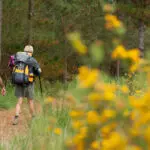
The Camino is uniquely restorative because it combines rhythm, nature and community. Each morning you lace up, move at a pace that’s yours and watch the landscape change. That physical routine brings clarity. The trail’s slow pace gives your mind time to sort through priorities. The Camino stacks three things that rarely happen together in everyday life steady movement, open landscape, and easy company and lets them work on you for days at a time. Rhythm and routine soothe an overactive mind, while the natural surroundings lower rumination and invite focus. Quiet conversations with fellow pilgrims ease loneliness without pressure, and the route’s simplicity reduces daily decision fatigue.
How Do You Plan a Camino Walk for Burnout Recovery?
If you’re burned out, the Camino can help you reset but only if you plan gently and respect your limits. Start with a shorter section or a guided week rather than committing to the full route straight away; compounding exhaustion helps no one. What We Do at Walk the Camino explains the practical support we provide, like luggage transfers, clear day-by-day itineraries, and local knowledge so that you can put your energy into healing rather than logistics.

Preparing Body and Mind with Simple Routines
Good preparation improves the therapeutic return of any walk. A modest fitness base prevents unnecessary pain and keeps the experience positive with our Walking Fitness for the Camino guidance for simple routines that get you trail-ready in a few weeks. Pack light, break in your boots well before day one, and tuck a small notebook into your bag. None of this sounds therapeutic on its own, but when your feet don’t hurt and your pack doesn’t drag, staying present comes far more easily, and presence is where the real benefit lives.
How to Use Mindful Walking on the Camino?
Walking and mindfulness pair naturally. You don’t need meditation experience to use walking as a therapy. Try simple prompts: notice your breath for three steps, attend to the sounds around you, or name three colours in the view. This kind of present-moment awareness pulls you out of the worry loop and into the walk itself, and over time, these small moments stitch together into a calmer, clearer mindset.

What Do Camino Walkers Say About Healing?
Many walkers tell us their best insights came when they least expected them — on a hill, at a café, or during a quiet dawn. One client described how weeks of steady walking helped them make a clear choice about work when they returned. Another found that daily journals slowed racing thoughts and improved sleep within days. These experiences point to the emotional architecture of the Camino: gradual, patient, and human.
How fellow pilgrims and small acts rebuild confidence
You’ll meet people with different backgrounds and similar questions. Conversations on the Camino are often honest and unhurried. That camaraderie helps with isolation, a common companion of burnout. Sharing small tasks such as finding a café, helping with directions, or swapping tips creates tiny wins that rebuild confidence. Those human exchanges are a big part of how the Camino mental health effect spreads.
You will certainly become aware of the kindness of the local people who run the ‘engines’ of the Camino; many of them work in family businesses, some for decades, all dedicated to serving pilgrims with typical Spanish hospitality.
Why Walking in Spain Shapes Reflection Differently
Walking in Spain, from the Pyrenees to Galicia, gives you both dramatic landscapes and quiet coastal approaches that support reflection. We shape our routes to include restorative stretches and culturally rich stops, so you can move between solitude and gentle company as you need. If you want to unplug fully, our blog Escape the Everyday: How the Camino Helps You Unplug from Modern Life helps you explore exactly how the route removes modern noise and invites calm.
Should You Choose a Guided Camino for Recovery?
Not every walk is the same. If you need extra reassurance, consider a guided itinerary with luggage transfers, clear daily distances and local support. We build itineraries that respect recovery needs and still deliver the deep benefits of pilgrimage. If you’re exploring your options, our about us and our Camino de Santiago and walking trips offer a helpful introduction to how we support walkers on their journey.
Simple Habits That Protect Your Recovery — On the Trail and After
The Camino ends in Santiago, but the recovery doesn’t have to. While you’re walking, choose realistic daily distances and allow proper rest days. Keep a short daily journal; many walkers find it slows racing thoughts within days. Back home, protect your sleep, take a genuine walking break most days, and be as deliberate about screen time as you were on the route. Small habits like these compound into shifts that last well beyond the trail.

This Camino Experience Could Be The Reset You Need
If you’re considering the Camino for burnout recovery, remember that the journey is as practical as it is poetic. It’s a walk that asks nothing dramatic of you, only honesty and presence. The mental health benefits build gradually, growing with each deliberate step along the way. If you’d like help planning a supportive route, guidance from people who understand recovery, or simply a friendly chat about your options, please do get in touch. We’re here to help you find the path that feels right for you.