The Camino Primitivo, or “Original Way,” is the oldest route of the Camino de Santiago. It begins in Oviedo, the capital of Asturias. This challenging yet rewarding pilgrimage is renowned for its stunning, rugged mountain landscapes, particularly in the early Asturian stages. The route descends from the mountains into Lugo and then joins with the Camino Frances at the town of Melide.
If you are looking for your first Camino, this route presents a few challenges for the novice long-distance walker. We recommend choosing one with more amenities and the company of fellow pilgrims along the road. The Camino Primitivo is a more solitary route; the middle section terrain is physically challenging, and more self-sufficiency is required due to less frequent cafes, bars, or restaurants.
If not for you, we will happily create a personalised itinerary tailored to your needs and interests for any route.
(If you’re still exploring your Camino options, browse our full selection of Camino Walking Trips.)
Price Includes
Single Supplement
£400
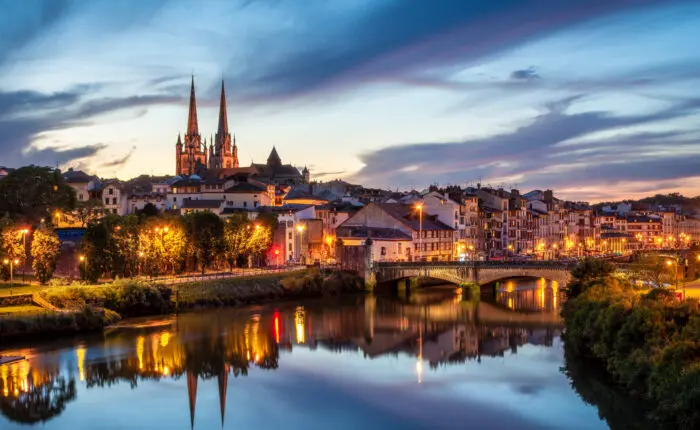
Make the most of your overnight in this delightful old city. A short stroll from our hotel, you will find bars and restaurants offering lively Asturian dining experiences, accompanied by the local cider. Your hotel is near the magnificent Oviedo Cathedral, where the Camino Primitivo begins. Have your credencial stamped here and buen camino…
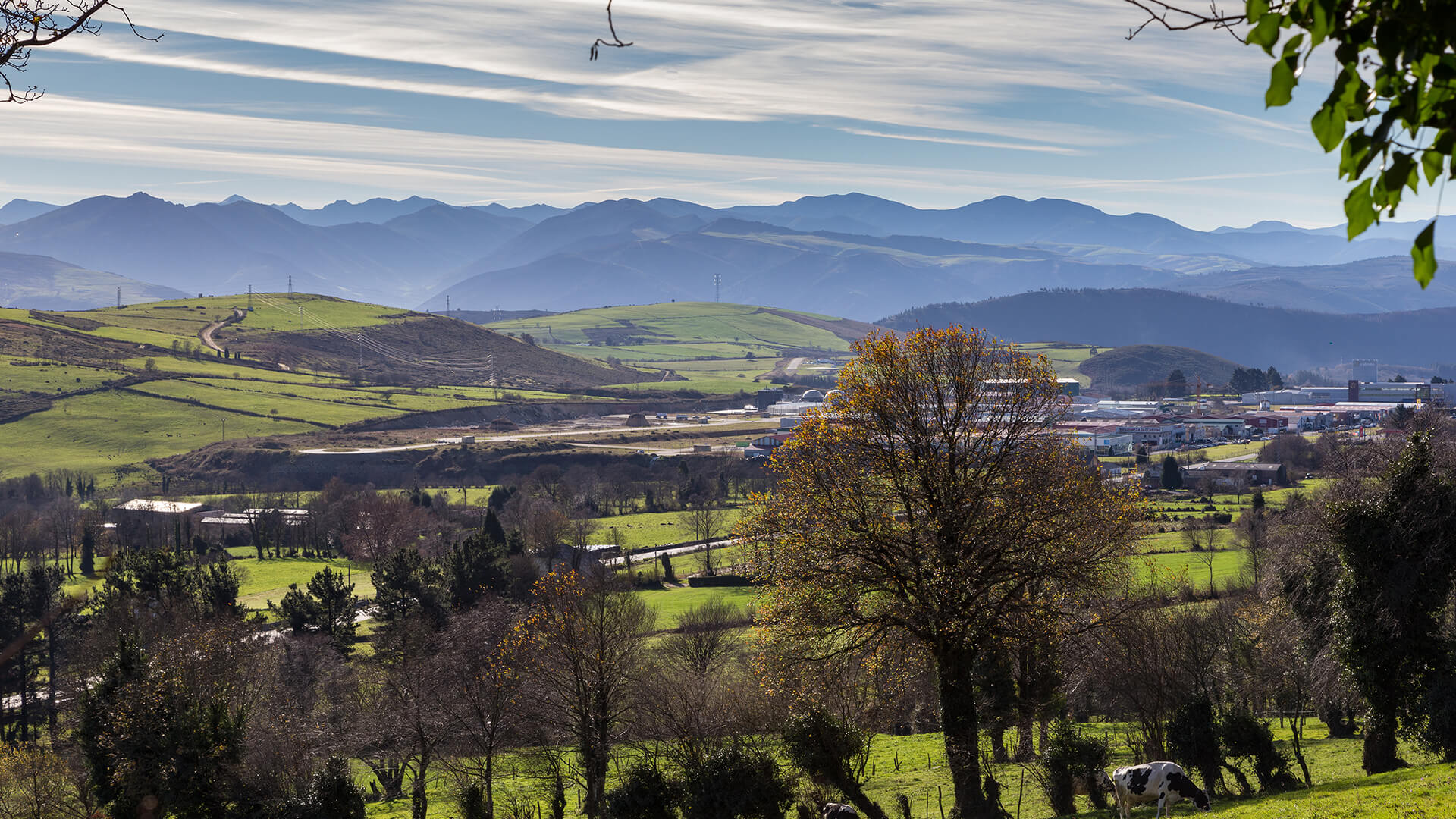
Leaving the city, you soon enter a picturesque landscape dotted with tiny villages, churches, and woods. Walking on small roads and country paths, there’s a short climb to Escamplero before descending into a river valley and onto the town of Grado.
The day begins with a gentle climb to the peak of Alto del Fresno before descending into the Narcea Valley, a little-known, successful wine-producing area. When you arrive at Cornellana, visit the magnificent Monastery of San Salvador. From here, the path to Salas climbs the river valley past small villages with no pilgrim services.
Your day starts with a long, steady climb to La Espinel. After a much-needed break and the steepest part behind you, the Camino gently undulates into Tineo.
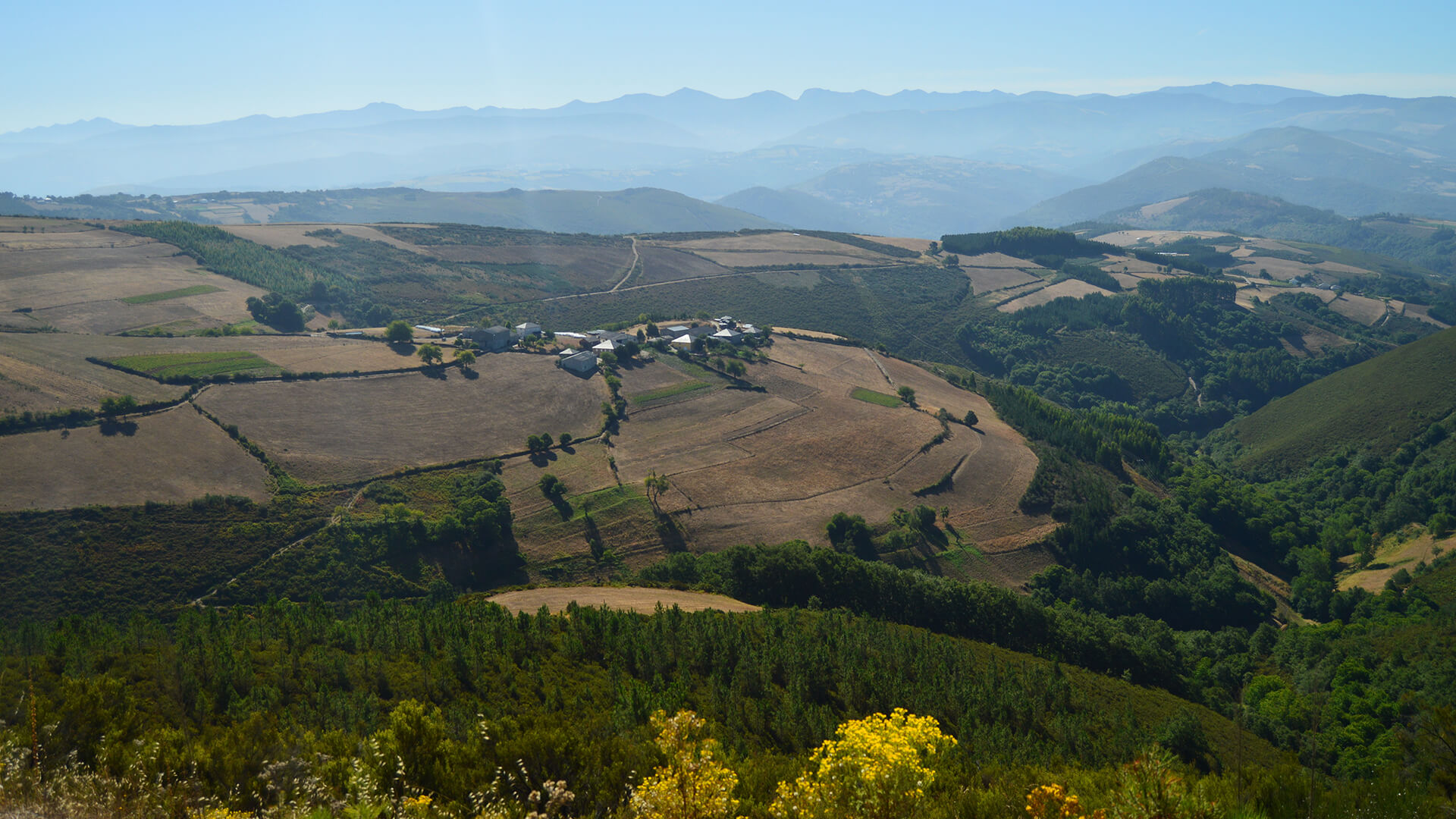
Today, you enter a section of the Camino Primitivo to enchant the wilderness lover. From Tineo, you climb some 500m in 5 km, with just as steep a descent on the other side. Now tracing the Camino along a valley to the village of Borres, the terrain continues to gently undulate all the way to your night’s rest in Pola de Allende.
The now-customary steep morning path rises 600 m from Pola to the high pass of Pueto de Pola. Lower down, the village of Berduco is a good place to stock up on any daily supplies before spending the night a further hour’s walk away in the hamlet of La Mesa.
There is a waymarked detour called the Hospital Route, which is 4.5 km shorter than the route through Pola. Although it is one of the most scenic stages of any Camino, this uninhabited area is exposed to suddenly changing weather. It is advisable to be self-reliant and prepared for the wind and cold, even in summer.
A mercifully short ascent starts your day, followed by a long, steep descent of 800m to the reservoir at Grandas de Salime. Then, there will be a short climb on the other side to the town and tonight’s lodgings.
The day starts with a long, gradual climb out of Asturias. Entering Galicia, the landscape becomes more populated with villages and farmsteads. You’ll see more typical services that sustain pilgrims on their journey.
This is a day of many moderate ups and downs, plus a steep ascent to Paradavella and two short steep climbs in the second half of the walk. The Camino is mainly a series of dirt paths, always staying close to the main road.
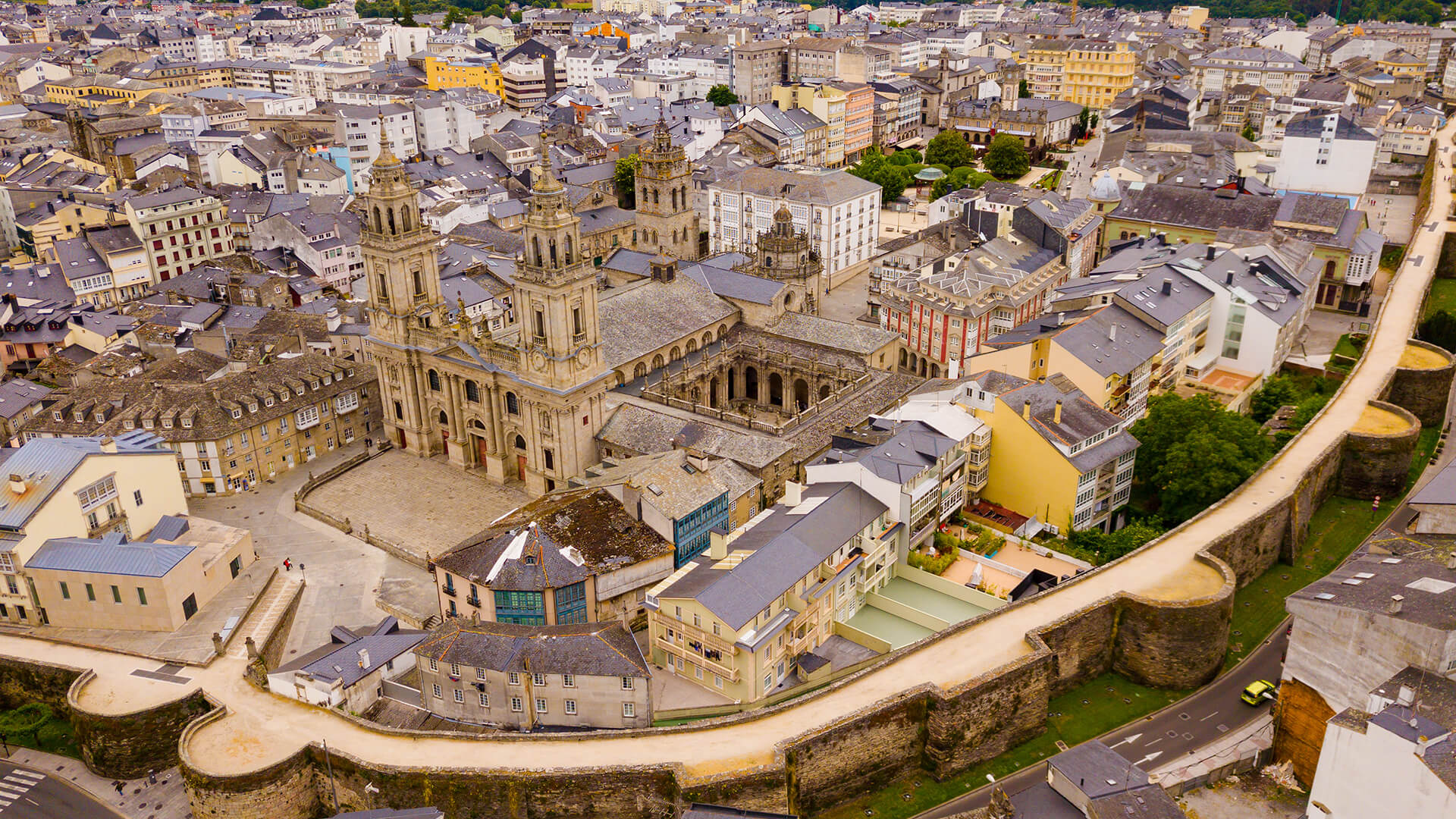
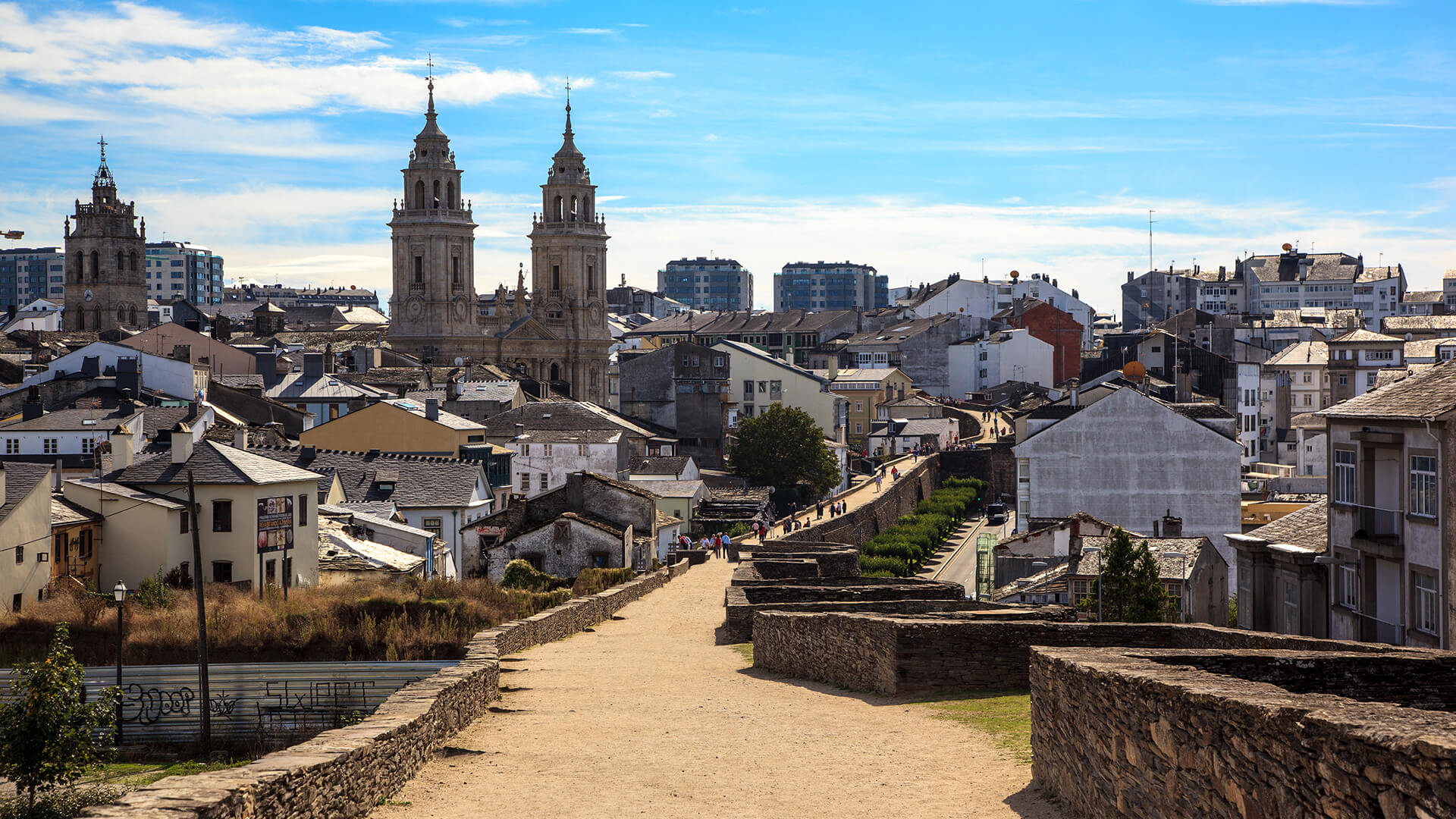
Once the hill out of Cadavo is behind you, the Way flattens through the outlying communities of Lugo to the great once-Roman walled city. It’s worth a sundown stroll along the tops of the impressive wall.
NB, some clients add a rest day in Lugo and spend two nights here.
You follow the bronze shells out of the ancient Roman city, passing through the Santiago Gate, to shadow country roads winding through an undulating wooded landscape. There are few refreshment stops on the way to San Roman with its 12th-century Romanesque Church. Much of the day is spent on asphalt, first leaving the city and then on the small back roads and paths that wind through quiet villages.
A walk along the old Roman road and country tracks, passing small settlements like Ferreira with it’s Roman bridge and onto a country hotel at Merlan (San Salvador).
Today you walk through stands of aromatic eucalyptus trees, on well-trodden country paths, passing small villages until arriving in Melide. This medieval township has close links with the Jacobean pilgrimage, and you will notice a surge in the number of walkers in town. Visit the town’s medieval centre and churches, and try Melide’s local delicacy: Pulpo (Octopus).
Today’s walk takes you through meadows, oak and eucalyptus woodland, and countless small hamlets, some of which bear names that echo their historical connections with the Pilgrim’s Way. This is the county of Arzua, a land with a strong dairy production known for its delicious cheeses.
Walk on natural pathways with good shade offered by trees. The Camino now becomes busier with pilgrims as we near the fabled city of Santiago.
The first part of your final stage into Santiago is through dense woodland. Enjoy the shade and peace -as you approach the city, aspahlt roads take over. After leaving the town of A Lavacolla, the Way approaches the Monte do Gozo (The Mount of Joy), a small hillock from which the pilgrim was able to see, for the first time, in the distance, the towers of the Cathedral of Santiago, hence the name of this spot. You descend into the urban stretch that will lead you to the heart of Santiago de Compostela’s old town and on to the tomb of St James, housed in the stunning Cathedral.
A second night in Santiago de Compostela is highly recommended, as there is so much to experience and enjoy here. Unless you walk into Santiago fairly early in the day, you might feel time is stressfully tight to receive your Compostela certificate and attend a Pilgrim Mass in the Cathedral. This is especially true during the busiest times.
Oviedo
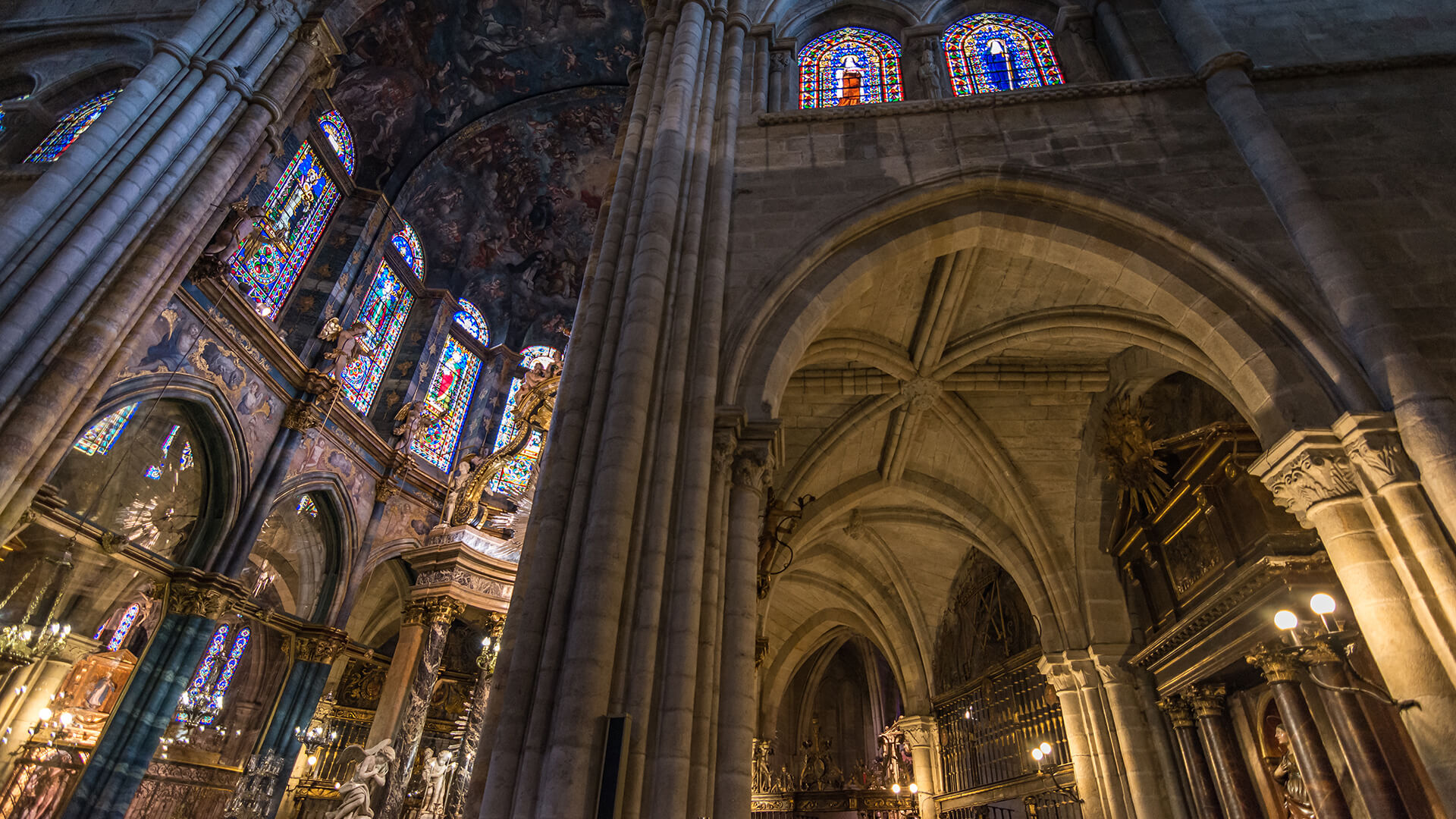
The official starting point of the Camino Primitivo is the famous Gothic Cathedral of San Salvador, in the heart of the charming Asturian city of Oviedo. Pilgrims sometimes divert to Oviedo simply to visit this cathedral. Located within the Cathedral is the Unesco Heritage site of the Camera Santa. This 9th-century chapel holds revered relics, including the Holy Shroud of Oviedo (Santo Sudario), believed by some to be the cloth that covered Christ’s face. Oviedo is also famous for its 9th-century pre-Romanesque architecture, much of which is UNESCO-listed. Santa María del Naranco and San Miguel de Lillo are two beautiful churches on Mount Naranco’s slopes, overlooking the city. They were part of a royal complex and are an exceptional display of early medieval art. You cannot do better in the evening than dinner on Calle Gascona. This street is lined with Sidrerías (cider houses) serving local dishes like fabada asturiana (bean stew) or cachopo (stuffed veal) where you can watch the impressive escanciado (traditional cider pouring).
Lugo
Located on a hill on the banks of the River Miño, the city of Lugo preserves significant remains of its Roman past, including its ancient wall dating back to the 3rd century AD. UNESCO declared it a World Heritage Site because it is the only complete and intact Roman defensive wall surviving in the former Roman Empire. The entire 2 km/1.2 mile circuit features a continuous walkway along the top, which you can stroll for panoramic views of the city’s historic centre. Inside the Roman walls, you’ll find quiet pedestrianised streets, wide squares, and spacious gardens. Here are the Cathedral, the Archepiscopal Palace, the City Hall, and some of the best restaurants in Galicia, serving the excellent fresh meats and fish that have earned Lugo gastronomic acclaim. The Carmen gateway, more commonly known as Porta Miñá, is one of the original Roman gates and is the historical exit for pilgrims continuing on the Camino Primitivo.
You’re in for a treat. Asturian gastronomy is hearty, traditional, and deeply connected to its coastal, mountain, and farming resources. The historic centre, with its cobblestone streets and charming squares, is a delight to wander around. Asturian cuisine is famous for its slow-cooked stews, high-quality meats, fresh seafood and incredible cheeses. Don’t leave Oviedo without sampling the renowned cider, “Sidra”. The pedestrian streets are packed with sidrerías, where you will find the traditional high-pour (escanciado) entertaining as well as thirst quenching.
Fabada Asturiana is the region’s most famous dish. It is a rich, comforting bean stew made with large white beans simmered slowly in chorizo, morcilla, and lacón. Cachopo consists of two veal or beef fillets stuffed with ham and local cheese, then breaded and fried. When served with fries and peppers, it’s truly a guilty pleasure. Some dishes may not be suitable for vegetarians, but there are adapted dishes to suit every taste. Asturias is known throughout Europe for it’s massive range of cheeses with over 40 types!. The most famous is Cabrales, a strong, pungent blue cheese aged in natural limestone caves. Given its long coastline, you’ll find fish like hake, monkfish, salmon and shellfish, often grilled or cooked in cider.
While cider is king here, the region has great local wines such as Galicia’s Albariño, which pairs excellently with the local seafood. Sidra is the quintessential Asturian drink, made from locally grown apples, and is fundamental to the region’s identity and social life. Sidra is poured by skilled escanciadors, holding the bottle above the head and pouring a thin stream into a glass held low near the hip. The crash of the liquid against the side of the glass oxygenates (or “breaks”) the cider.
Hand-picked establishments are well known to our team and we have developed strong personal connections over the past 12 years. We prefer to work with comfortable, small, family run establishments on or close to the Camino. This can include a variety of traditional farmhouses, historic home and 1-3* equivalent inns and hotels. All rooms have en-suite facilities.
If your budget allows, we can suggest some superb accommodation upgrades, as we often work with the top-end establishments on the Camino. Sometimes this can mean a short transfer off the Camino but we can include your transfers both ways. Santiago de Compostela has a full spectrum of upgrades and luxurious establishments.
Our itineraries are mainly offered on Bed and Breakfast basis. We encourgae you to get out and about to try local dishes in the vicinity. Sampling the widest range of Spanish dishes and soaking up the local atmosphere is all part of the Camino experience. You’ll be rubbing shoulders with international walkers and the local people in the bars and diners along the Way. If you prefer to have dinner prebooked, then in-house set menus are often available too. We can also arrange for you to half board accommodation along the way if you prefer to have everything booked and paid in advance.
We quote all our journeys with bag transfers as standard. We heartily recommend that you book your main piece of luggage to be transferred between accommodations. It helps your enjoyment of the Way and keeps unnecessary stress off your back and joints.
We work with dedicated professional companies that do this essential work day in and day out. The system works very well: Bags are picked up between 8 and 8:30 a.m. and delivered to the next hotel between 3 and 5 p.m.
This daily service is organised so that you only have to worry about carrying a day sack with your essential items.
If you wish to carry your own bag, that is fine with us. If you change your mind, you can always call us and request to add on the service.