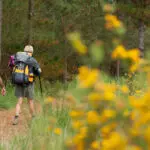
The Camino de Santiago, a revered walking trail since the eighth century, has long been a melting pot of diverse cultures, an epic journey along which kindred spirits from every corner of the globe commune in the ancient act of pilgrimage. With routes emanating from the north, south, east, and west of Europe, all paths meander across Spain, eventually arriving at the hallowed shrine of Saint James the Apostle in the heart of Galicia’s capital, Santiago de Compostela.
This pilgrimage is more than a mere physical trek: It’s a journey of self-discovery, spiritual rejuvenation, and immersion into local cultures and European history. The voyage is organized into various stages, allowing pilgrims to enjoy the regions they cover while also making the journey manageable.
This blog endeavors to elucidate the different stages of some of the most popular routes of the Camino de Santiago, providing a compass for prospective pilgrims in charting their journey.
And if we leave you inspired to begin planning your Camino adventure, be sure to explore our range of Camino de Santiago Tours.

Overview of Some Popular Camino Routes
The Camino de Santiago comprises a network of ancient pilgrim routes, each with its own charms and challenges. Among these, a few stand out for their popularity and the unforgettable experiences they offer.
The Camino Francés is the most famous and traveled route, beginning in St. Jean Pied de Port, France, and traversing across northern Spain to Santiago de Compostela. It unveils a rich tapestry of landscapes, ranging from the Pyrenees mountains to the vineyards of La Rioja.
The Traditional Camino Portugués Route starts in Lisbon or Porto in Portugal and leads pilgrims north to Santiago, journeying through picturesque countryside and historic towns.
The Camino del Norte begins at the Basque border, following the northern coastline of Spain, and is revered for its breathtaking coastal scenery. (We offer two Camino del Norte routes, the Camino del Norte Basque Coast and the Camino del Norte Cantabria & Asturias Coast.)
Lastly, the Via de la Plata, commencing in Seville in southern Spain and traveling northward to Santiago, is the longest Camino route. It’s a quieter but equally enriching path. If you’d like to experience the Via de la Plata route with expert locals taking care of your accommodation and baggage transfer, Walk the Camino offers Via de la Plata Last 100 km Tour.
Each of these routes is divided into various stages to make the long journey more manageable and to cater to the diverse capabilities and preferences of the pilgrims.
Of course, there are many more Camino routes than these four. Discover others on our main Camino Tours page.

Stages of the Camino Francés
The Camino Francés (or simply French Way) is perhaps the quintessential Camino experience, offering a blend of cultural, historical, and natural beauty.
The typical stages of the Camino Francés:
The initiation of the pilgrimage occurs from St Jean Pied de Port to Roncesvalles, crossing the Pyrenees, covering a distance of 25 km.
The journey continues from Roncesvalles to Pamplona, a trek through the Navarre countryside with its rolling hills and quaint villages over 27 km.
Pamplona to Logroño stretches across 74 km through the wine region of La Rioja, with its lush vineyards and ancient monasteries. (Readers passionate about wine will want to check out our Camino – La Rioja Tour Experience.)
Logroño to Burgos takes you along an approach to the meseta, the Spanish high plateau covering 124 km.
Burgos to León is a stretch across the open plains of the meseta, a test of endurance and self-reflection over 180 km.
From León to O Cebreiro, pilgrims enter the region of Galicia, known for its Celtic heritage and mountainous terrain, covering 155 km.
O Cebreiro to Sarria is a scenic and relatively shorter stage through the Galician countryside, stretching over 53 km.
The final leg from Sarria to Santiago de Compostela is filled with anticipation as Santiago de Compostela nears, covering a distance of 114 km.
Each stage of the Camino Francés presents its own set of challenges and rewards, giving pilgrims a rich and varied experience as they make their way to the holy city of Santiago de Compostela.

Stages of the Camino Portugués
The Camino Portugués is another favored route, winding through the heart of Portugal and into Spain, offering a blend of coastal and inland scenery coupled with a rich maritime and medieval history.
The typical stages of the Camino Portugués:
The initial stretch from Lisbon to Porto is a long but rewarding journey through Portugal’s picturesque countryside and historic towns, covering a distance of 380 km. This is an excellent opportunity to explore one of Portugal’s two major cities – both of which rank among the most beautiful cities in Europe.
From Porto to Tui, pilgrims have an option to traverse inland through Barcelos and Ponte de Lima or along the coast, covering a distance of 112 km.
The final stage from Tui to Santiago de Compostela allows pilgrims to cross into Spain to enjoy a mix of rural landscapes and ancient hamlets before reaching the grand finale in Santiago de Compostela, covering a distance of 117 km.
Each stage on the Camino Portugués is laden with historical significance, offering pilgrims a glimpse into the medieval era while journeying through tranquil countryside and along rugged coastline.
Browse our full selection of Camino Routes in Portugal.
Stages of the Camino del Norte
The Camino del Norte is a less-traveled route that hugs the northern coast of Spain with views of the Cantabrian Sea. It’s a path filled with natural beauty, from pristine beaches to lush forests.
The typical stages of the Camino del Norte:
The journey begins with a challenging but beautiful start from Irun to San Sebastian, with steep ascents and descents offering breathtaking views of the coastline, covering a distance of 27 km.
Transitioning into the heart of Basque Country, the stretch from San Sebastian to Bilbao is known for its unique culture and gastronomy, covering a distance of 124 km.
Continuing along the coast from Bilbao to Santander, pilgrims pass through charming fishing villages and enjoy the maritime ambiance, covering a distance of 109 km.
The route transitions from the coast to the rugged interior from Santander to Oviedo, experiencing the diverse landscapes of northern Spain, covering a distance of 189 km.
The final stretch from Oviedo to Santiago de Compostela merges with the Camino Primitivo (you can Walk the Last Stage of the Camino Priitivo with us), leading pilgrims through the heart of Galicia to Santiago de Compostela, covering a distance of 315 km.
The Camino del Norte serves up the best of northern Spanish culture and scenery. This is a less crowded but deeply enriching route for those seeking a quieter and nature-filled Camino experience.

Stages of the Via de la Plata
The Via de la Plata, extending from Seville in southern Spain to Santiago de Compostela in the north, is an ancient Roman route known for its solitude and the peaceful ambiance it offers.
The typical stages of the Via de la Plata:
The first stretch from Seville to Salamanca covers a distance of 300 km, passing through the tranquil countryside of Extremadura, with its rolling hills and ancient Roman ruins.
The journey continues from Salamanca to Zamora, a shorter stretch of 66 km, offering a glimpse into Spain’s medieval history with its well-preserved ancient architecture.
Transitioning from Zamora to Ourense covers 215 km, as the route continues northward through the picturesque landscapes of the Spanish heartland.
The final leg from Ourense to Santiago de Compostela is a distance of 100 km, leading pilgrims through the lush landscapes of Galicia, culminating in the arrival at the sacred destination.
See our Via de la Plata Last 100 km Tour to learn more about this enchanting route.
Tips for Planning Your Journey
Planning your Camino de Santiago pilgrimage requires careful consideration to ensure a fulfilling and enriching experience.
Research extensively on the different routes and stages to choose the one that aligns with your physical capability and personal preferences.
Consider the time of the year and the weather conditions as they significantly impact your Camino experience.
Allocate rest days in your itinerary to recover and explore the local culture and landmarks.
Prepare physically and mentally by engaging in regular walking or hiking activities months before your pilgrimage.
Additionally, reading personal experiences and books on the Camino can provide valuable insights.
Finally, ensure you have the necessary gear, including comfortable walking shoes, a durable backpack, and clothing suitable for varying weather conditions.
Experience the Camino
As you plan your journey, embrace the preparation as part of the pilgrimage, and look forward to the myriad experiences and the personal development and sense of satisfaction that awaits. With so many unique Camino routes to choose from, you are sure to find a journey just right for you.
Explore our selection of Camino Tours (including alternative pilgrimage routes in other countries), and be sure to get in touch if you have any questions.