The Camino to Cape Finisterre and Muxía
Many pilgrims who arrive in Santiago de Compostela feel called to go further. Going beyond the cathedral and Walking to Cape Finisterre and Muxía is one of the oldest and most spiritually significant traditions of the Camino de Santiago. These coastal destinations were once believed to be the “end of the known world” and carry deep historical and symbolic meaning.
This extension of the Camino allows walkers to follow in the footsteps of ancient pilgrims, who, after paying homage to Saint James, journeyed westward to seek purification, closure, and connection with the vast Atlantic Ocean.
First Stop: Fisterra and the Lighthouse at the Edge of the World
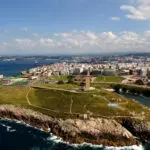
Most modern pilgrims first reach the small fishing village of Fisterra, located beside the iconic Cape Finisterre lighthouse. The name “Finisterre” comes from the Latin Finis Terrae—“end of the earth”—a fitting name for this dramatic, windswept headland overlooking the sea.
Here, pilgrims often take part in symbolic rituals: leaving behind worn-out boots or clothing, or simply sitting in silence to reflect as the sun sets over the Atlantic. It’s a place of introspection, symbolism, and natural beauty, and a powerful way to mark the true end of the Camino.

Muxía: A Sacred Coastal Pilgrimage Site
From Fisterra, many continue north along the coast to Muxía, another ancient pilgrimage site deeply entwined with Galician myth and Marian devotion. It is here, according to legend, that the Virgin Mary arrived in a stone boat to encourage Saint James in his missionary work across the Iberian Peninsula.
The focal point of this small town is the Sanctuary of A Virxe da Barca (Our Lady of the Boat), perched dramatically on a rocky promontory overlooking the sea. This shrine is one of Galicia’s most revered pilgrimage destinations, blending Christian tradition with older, pre-Christian elements.
The Miraculous Stones of Muxía
Around the sanctuary lie three massive granite rocks, each associated with the Virgin’s stone boat. These stones are the focus of centuries-old rituals that combine local legend with religious devotion:
- A Pedra dos Cadrís – Said to represent the hull of the stone boat. Pilgrims crawl underneath it nine times in a ritual believed to cure back pain and physical ailments.
- A Pedra de Abalar – A “wobbling stone,” said to be the boat’s sail. According to tradition, only those who are free of sin can make it gently rock.
- A Pedra do Temón – This rock represents the tiller or rudder of the boat.
These stones reflect Galicia’s unique blend of Celtic mysticism and Catholic faith, and they remain a powerful draw for both locals and pilgrims.
The Festa da Virxe da Barca: A Celebration of Faith and Heritage
Every year, on the second weekend of September, Muxía hosts one of Galicia’s largest and most vibrant religious festivals: the Festa da Virxe da Barca.
- Saturday kicks off with a colorful procession of people from nearby villages, followed by a communal seafood feast, traditional Galician music, and dancing late into the night.
- Sunday morning features an outdoor mass held in front of the sanctuary, followed by another solemn procession and a spectacular fireworks display to conclude the festivities.
For visitors, it’s a unique opportunity to witness the Camino’s living traditions and the enduring power of faith, legend, and community on the Galician coast. Ready to experience these wonders for yourself? Consider taking our Camino Finisterre Tour: A Journey to World’s End.